


1. Material Preparation
The machining process begins with selecting the appropriate material.
Common materials include:
- Aluminum 6061-T6
- Aluminum 7075
- ADC12 Aluminum Die Castings
- Cast Iron
- Alloy Steel
Before machining, raw materials are inspected for hardness, porosity, and dimensional consistency to ensure stable machining performance.
2. Precision Fixturing
Accurate workholding is essential for maintaining machining precision.
Custom fixtures minimize vibration while ensuring repeatable positioning throughout multiple machining operations.
Proper fixturing also reduces deformation, especially for lightweight aluminum cylinder heads.
3. Rough CNC Milling
The first machining stage removes excess material and forms the basic geometry of the combustion chamber and spark plug mounting area.
During rough milling, engineers optimize:
- Material removal rate
- Cutting forces
- Heat generation
- Tool life
This stage prepares the component for high-precision finishing operations.
4. Finish Milling of the Spark Plug Seat
Finish milling creates the sealing surface where the spark plug contacts the cylinder head.
Critical requirements include:
- Flatness
- Surface finish
- Perpendicularity
- Concentricity
Even slight imperfections may result in combustion gas leakage or improper sealing.
5. Precision Drilling
The spark plug hole must be drilled with exceptional positional accuracy.
Modern CNC machining centers use high-performance carbide drills combined with optimized cutting parameters to maintain:
- Hole straightness
- Diameter accuracy
- Surface quality
Coolant delivery is carefully controlled to reduce heat and improve chip evacuation.
6. Thread Machining
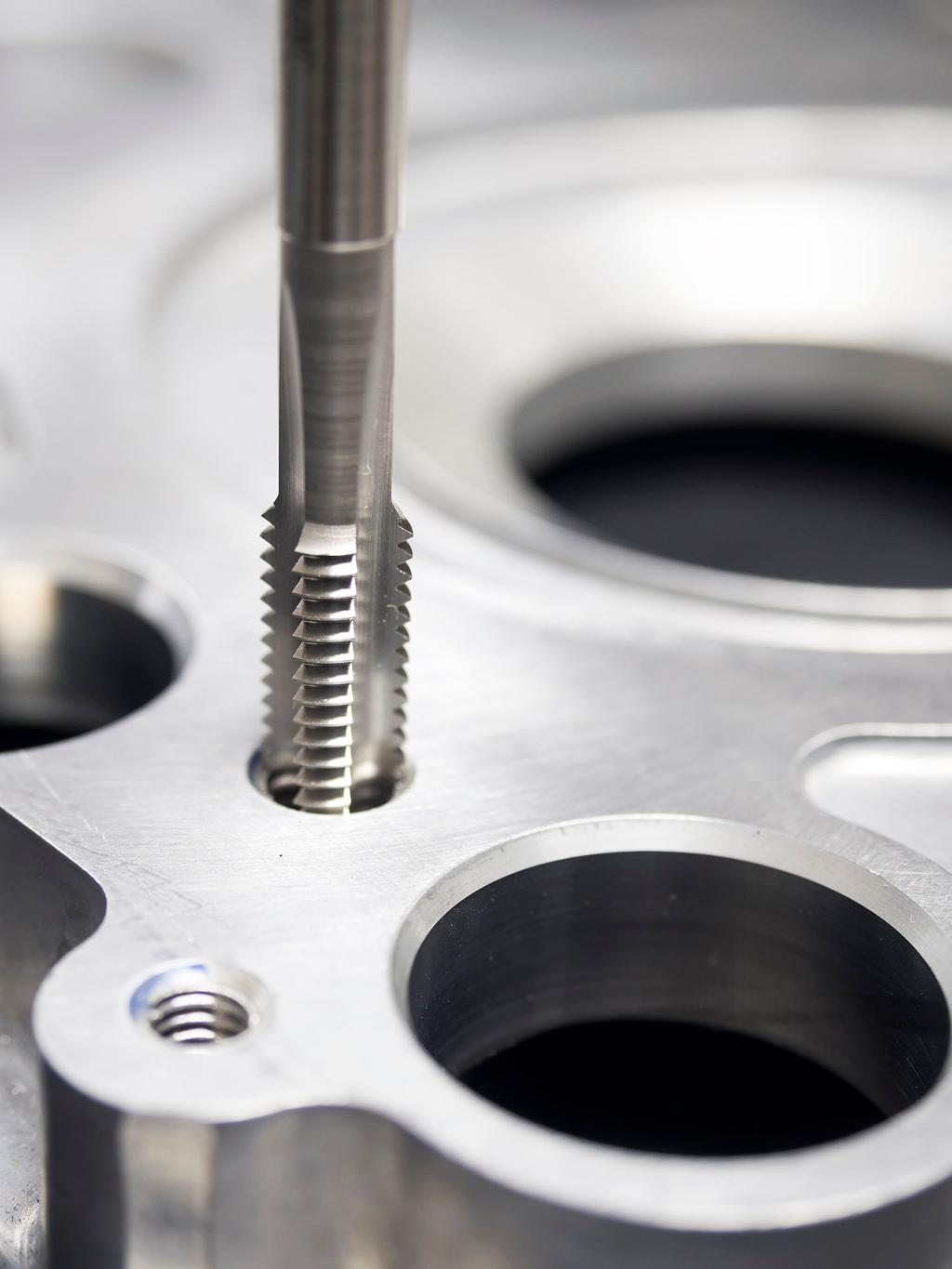
Spark plug threads require extremely high precision.
Manufacturers typically use:
- Thread Milling
- Rigid Tapping
Thread milling offers greater flexibility, improved surface quality, and lower risk of thread damage, particularly for aluminum cylinder heads.
Inspection focuses on:
- Thread pitch
- Thread depth
- Thread accuracy
- Surface integrity
7. Chamfering and Deburring
After thread machining, all sharp edges are removed.
Proper chamfering:
- Protects spark plug threads
- Improves assembly
- Prevents burr contamination
- Enhances product appearance
Manual deburring is minimized through optimized CNC toolpaths.
8. Surface Finishing
Depending on the application, additional surface treatments may include:
- Glass Bead Blasting
- Sand Blasting
- Clear Anodizing
- Hard Anodizing
- Cleaning and Passivation
These treatments improve corrosion resistance while enhancing product appearance.
9. Precision Quality Inspection
Every spark plug seat should undergo comprehensive dimensional inspection.
Typical inspection equipment includes:
- Coordinate Measuring Machine (CMM)
- Thread Gauges
- Bore Gauges
- Surface Roughness Tester
- Height Gauges
Key inspection items include:
- Hole position
- Thread quality
- Seat concentricity
- Flatness
- Surface roughness
Strict inspection ensures consistent quality throughout production.
10. Final Cleaning and Packaging
Before shipment, components are thoroughly cleaned to remove chips, coolant residue, and contaminants.
Protective packaging prevents thread damage and surface scratches during transportation.
For export shipments, custom foam inserts or protective trays are commonly used to ensure parts arrive in perfect condition.