


The automotive industry is moving toward lighter, stronger, and more complex components. Whether for electric vehicles (EVs), high-performance racing cars, or precision aftermarket parts, manufacturers are under constant pressure to improve performance while reducing weight.
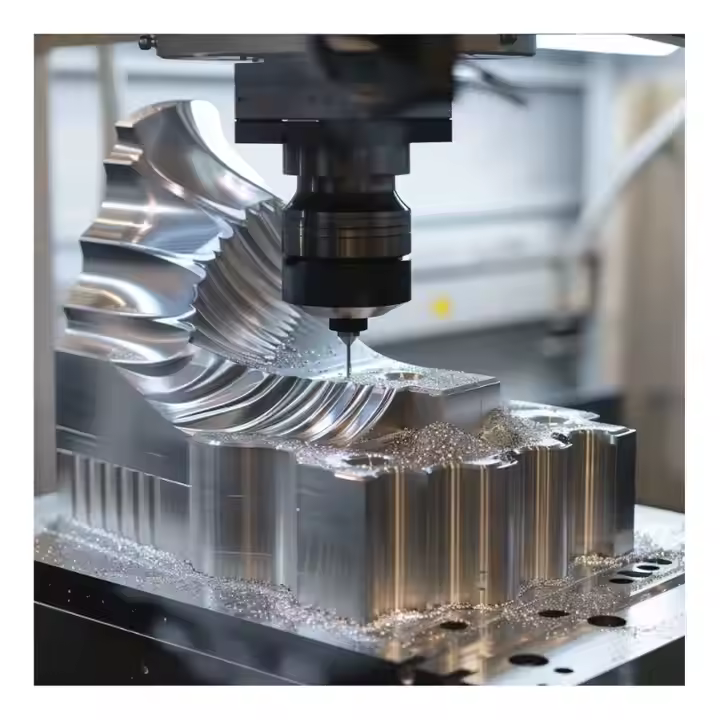
For these demanding applications, 5-axis CNC machining has become one of the most advanced manufacturing solutions. It enables the production of intricate aluminum components with exceptional accuracy, excellent surface quality, and shorter lead times.
Why 5-Axis CNC Machining Is Essential for Automotive Parts
Unlike conventional 3-axis machining, a 5-axis CNC machine can simultaneously machine multiple surfaces in a single setup. This greatly improves dimensional accuracy while reducing fixture changes and machining time.
For automotive manufacturers, this means:
- Higher machining precision
- Better consistency across production batches
- Reduced production lead time
- Lower overall manufacturing costs for complex parts
- Improved assembly accuracy
As vehicle designs become increasingly sophisticated, these advantages make 5-axis machining a preferred choice for precision aluminum components.
Typical Automotive Applications
EV Battery Systems
Electric vehicles rely heavily on lightweight aluminum components for thermal management and structural support.
Typical parts include:
- Battery housing components
- Cooling plates
- Inverter enclosures
- Motor housings
- Charging system brackets
The excellent machinability and heat dissipation of aluminum make it an ideal material for EV applications.
Engine & Powertrain Components
High-performance engine components demand excellent dimensional stability and surface finish.
Common applications include:
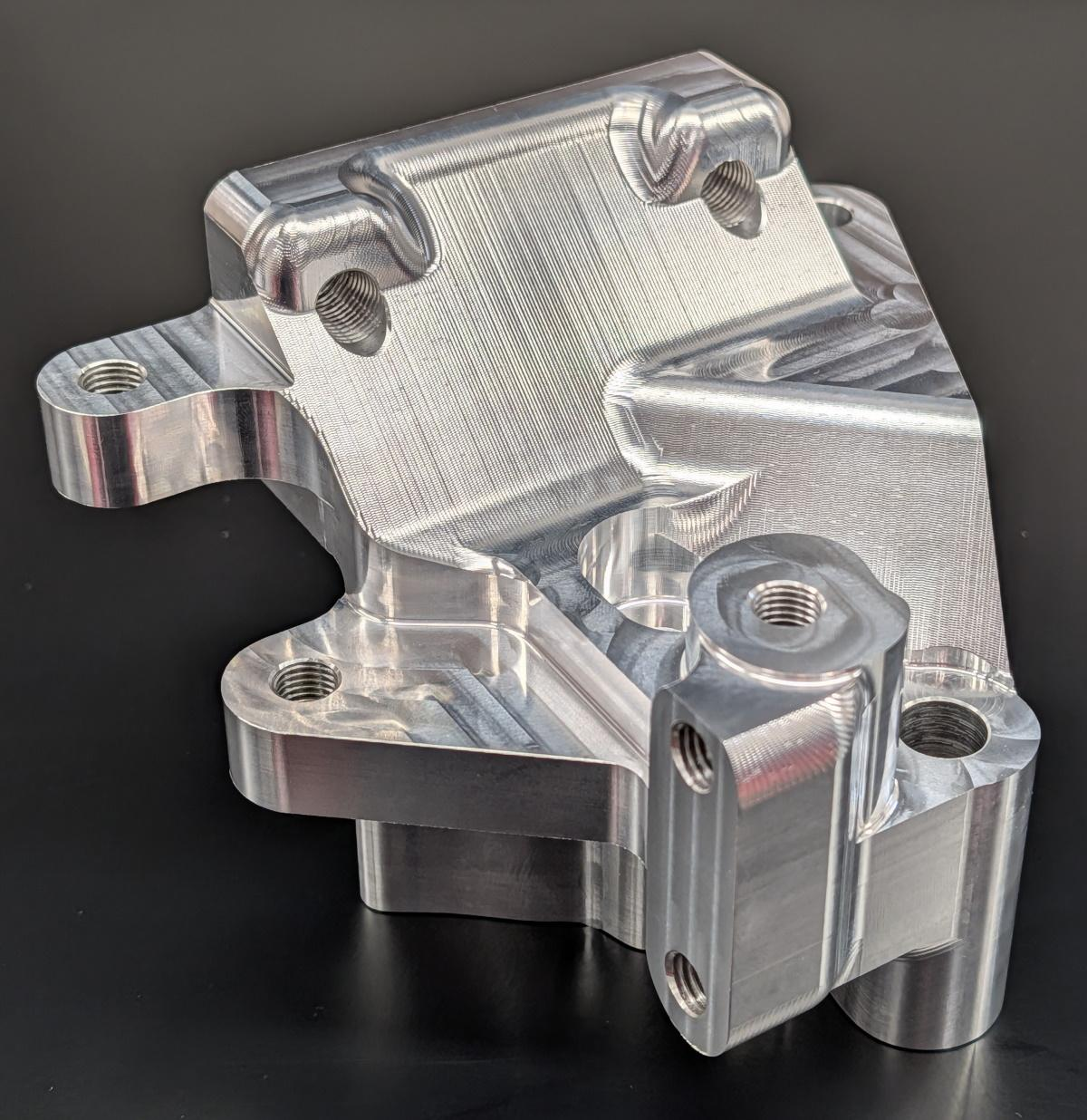
- Engine mounting brackets
- Intake manifolds
- Throttle body housings
- Turbocharger components
- Transmission housings
5-axis machining enables complex internal passages and multi-angle features to be manufactured with high precision.
Suspension & Chassis Components
Reducing unsprung weight improves vehicle handling and fuel efficiency.
Typical machined parts include:
- Suspension brackets
- Steering knuckles
- Shock absorber mounts
- Lightweight structural supports
- Control arm components
These parts require high strength while maintaining tight dimensional tolerances.
Performance & Racing Parts
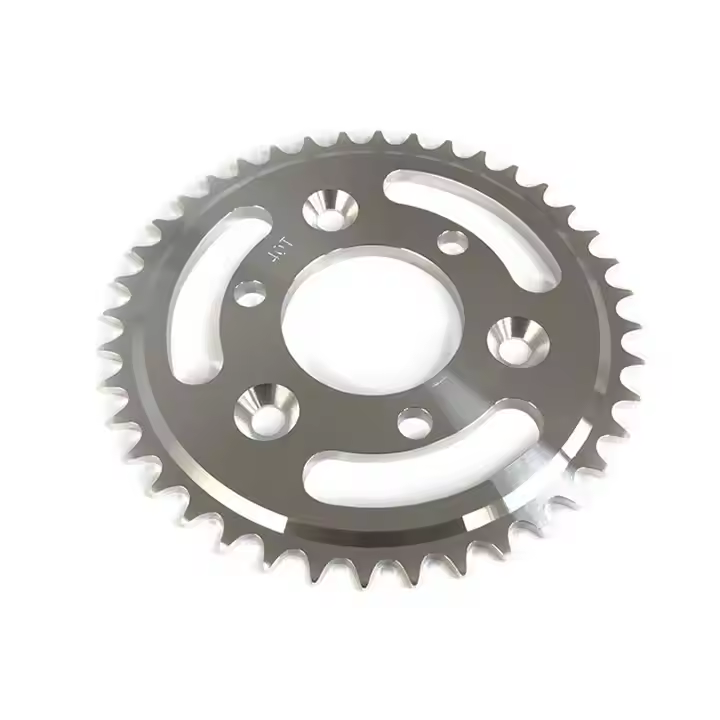
For motorsport and aftermarket upgrades, precision and weight reduction are equally important.
Examples include:
- Billet aluminum engine covers
- Brake caliper adapters
- Lightweight pulleys
- Oil pump housings
- Custom transmission adapters
Complex geometries can often be completed in one machining cycle, reducing both lead time and machining error.
Design Considerations for Automotive Aluminum Parts
Although 5-axis machining offers tremendous flexibility, thoughtful design can further improve manufacturing efficiency and part quality.
Select the Right Aluminum Alloy
Different applications require different material properties.
- 6061-T6 – Excellent machinability and corrosion resistance for general automotive parts.
- 7075-T6 – High strength for racing, motorsport, and structural components.
- 5083 – Superior corrosion resistance for harsh operating environments.
Choosing the right alloy helps balance performance, durability, and cost.
Avoid Excessively Thin Walls
Very thin sections may deform during machining, especially on large aluminum components.
Maintaining appropriate wall thickness improves rigidity and machining stability.
Add Internal Corner Radii
Sharp internal corners require specialized tooling and increase machining time.
Adding suitable radii can:
- Improve tool life
- Reduce cycle time
- Enhance surface quality
- Lower manufacturing costs
Consider Surface Finishing During Design
If parts require:
- Hard anodizing
- Powder coating
- Laser marking
These finishing processes should be considered early in the design stage, as coating thickness and cosmetic requirements may affect machining tolerances.
Design for Tool Accessibility
Although 5-axis machines can access difficult angles, extremely deep and narrow cavities may still require long cutting tools, which can reduce rigidity and surface quality.
Optimizing tool access helps improve machining efficiency and overall part quality.